
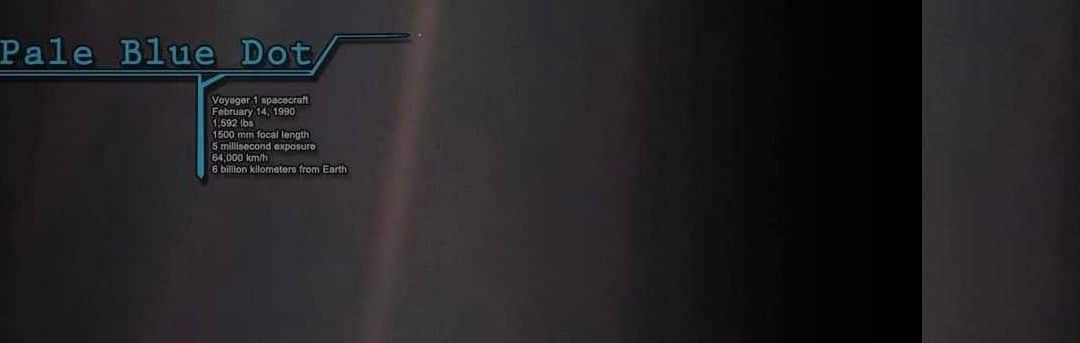
Serie: Carl Sagan Interview | Pale Blue Dot
Explore the cosmic insights of Carl Sagan in this captivating interview with Mary Hynes. Discussing the vast universe and the question of a divine designer, this epic conversation aired on Studio 2 on January 30, 1995.

 ✨ Our Shop Is Here! – When Images Speak Louder Than Words ✨🛸
  👉 T-shirts, mugs,


stickers & more! 🛍️🛒 👕
Transcript – Interview: Carl Sagan | Jan 30, 1995 – Second Part
Mary Hynes:
You make the argument in “pale blue dot” that it’s time to hit the road again, skyward, as in space travel exploration, perhaps colonies, for the very salvation of this species. How is that?
Carl Sagan:
Well first off, as you suggest, we are a wandering species; we come from hunter gatherers, we are nomads, and for the million years that the human family has been around, that was our lifestyle. That must be built in to us deeply.
It’s only for the last ten thousand years that we’ve had a settled and sedentary existence and now the earth is all explored; our exploratory instincts are unfulfilled and i think many people, i recognize not all, but many people would long for real exploration of real new world, even vicariously.
Secondly, while i don’t for a moment suggest the earth is a disposable planet; It is nevertheless true that we humans are now a danger to ourselves.
Our technology really can cause enormous insults on the environment that protects us, especially the atmosphere. Therefore if we were concerned, had a prudent regard for the long term well-being of our species, we would hedge our bets or as conservatives like to say, we would diversify our portfolios. we would put self-sustaining human communities on many worlds, so if the worst happens, there would be an outpost of us somewhere else.
Serie: Carl Sagan Interview | Pale Blue Dot
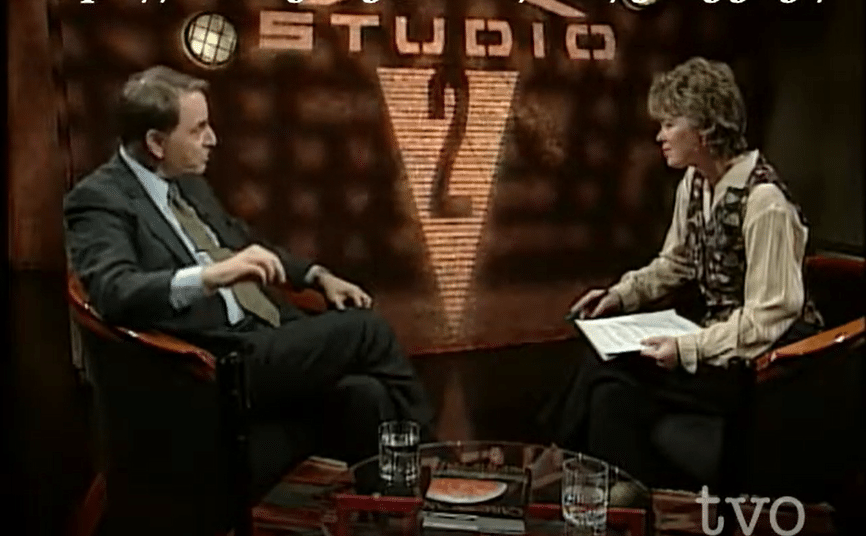
Carl Sagan and Mary Hynes at Studio 2
Mary Hynes:
Isn’t the danger in that thinking, though, that we come to regard the earth as disposable? That we found this nest, let’s move on to the next?
Carl Sagan:
That’s a very good question and, by the way, even birds know not to foul their nest, how come we don’t know that? The argument you’ve just presented would be true if it were an either-or situation. But in fact, the cost of moving out into space, done over a reasonable timescale matching the technology, which is centuries, is tiny compared to the cost of making the environment of the earth right.
These are not competitive; we should do short-term and long-term things, both.
Mary Hynes:
Part of your fame, professor Sagan, apart from Johnny Carson making sport of your “billions and billions and billions”..
Carl Sagan: Which i never said, by the way!
Mary Hynes: You never said that?
Carl Sagan: Never did I say it. He said it.
Mary Hynes:
And here he made a career out of his impressions. Part of your fame stems from the fact that you are a scientist who makes science intelligible. Does it trouble you that to so many people science remains unintelligible, that science is something so foreign to people, people take some sort of pride in saying uh, i know nothing about science, i’m a real luddite.
Serie: Carl Sagan Interview | Pale Blue Dot
Carl Sagan:
Absolutely. Science and technology are the key to our civilization.
Look at television, look at so much. If you look at anything, food, anything, you find we have made a civilization based on science and technology and then at the same time have arranged things so almost nobody understands science and technology.
That is a clear prescription for disaster. We might get away with it for a while, but sooner or later this combustible mixture of ignorance and power is gonna blow up in our faces. We must make science and engineering palatable. And the thing is, it is so exciting. It is so stirring.
Mary Hynes:
Well it’s exciting listening to you; it wasn’t exciting in grade 11 physics, let me tell ya.
Carl Sagan:
But let me tell you my experience. My experience is, you go talk to kindergarten kids, or first grade kids, you find a class full of science enthusiasts.
And they ask deep questions! What is a dream? Why do we have toes? Why is the moon round? What is the birthday of the world? Why is grass green?
These are profound, important questions. They just bubble right out of them! You go and talk to twelfth grade students and there’s none of that. They’ve become leaden and incurious; something terrible has happened between kindergarten and twelfth grade and it’s not just puberty.
Mary Hynes:
And you’re a nerd if you love science in the twelfth grade.
Carl Sagan:
Absolutely.
Now, whatever this is due to, and part of it is certainly the fact that grown-ups have not made the excitement of science available to kids, this is really foolish. We have, in fact, beaten science excitement out of kids. They start out excited, and then we arrange, whatever the machinery is, for them to wind up not liking it and this is just so self-destructive.
Mary Hynes:
How do we get it back? How do we imbue them with that sort of, love for science?
Carl Sagan:
Television is certainly a very good way to do it. The success of “cosmos,” seen in 60 countries, by 500 million people.
Mary Hynes: your series on pbs.
Carl Sagan:
That’s right, i mean, who figured it’d be so successful. And from the letters it’s very clear, so clear, that people hunger – they understand that science is essential for their future.
They understand that decisions are being made, using science and technology, about their future that they have no control of, especially in democracies, because they don’t understand it. They understand that science is reaching out to the deepest questions of origins from the origin of our species and our planet, to the origin of the entire universe.
Serie: Carl Sagan Interview | Pale Blue Dot
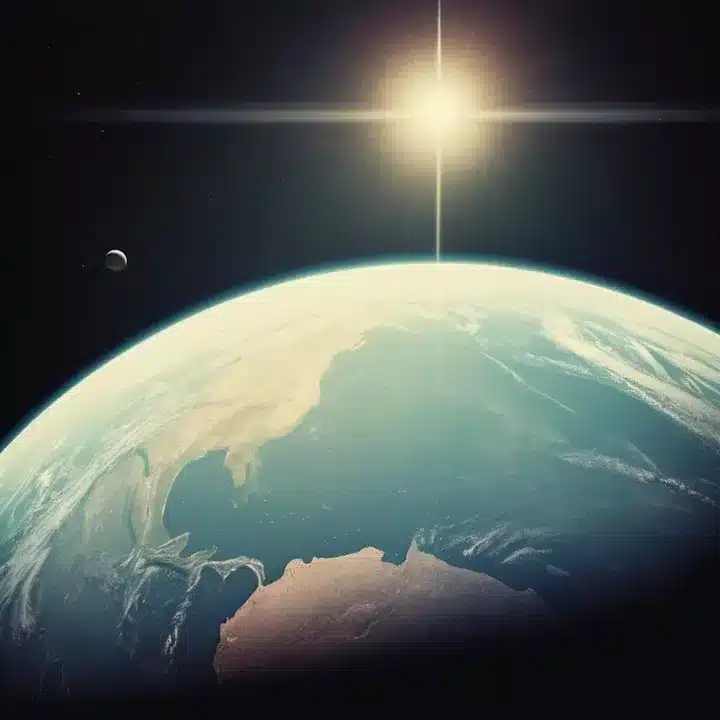
🧿✨🛸🎽 Love this artwork? 👉 Get it on t-shirts, mugs, stickers & more here! 🛍️🛒 👕
Issues, that every human culture has addressed, and that we are really finding out the answers to today. They want in and the society doesn’t provide it.
Schools do not teach it well, the media are in many respects hostile to it. You see, it runs right through the society and students have a responsibility, teachers have a responsibility, especially teachers who don’t understand the material that they are teaching.
Why is the basketball a coach teaching chemistry? Why is it that very spiffy jackets with the school letter on it, that are attractive to members of the other sex, are made available to varsity football, baseball and basketball teams, but not those who perform extremely well in mathematics or science or history or English?
Who made the decision that these attractive jackets should go to the one group, but not the other group? And is that a wise decision?
The issue that you’ve raised seems to me a very important one and the interesting thing is that there is no one place in the society – if only we could fix that one thing, higher teacher standards, let’s say, we would fix it all.
No, it runs too deeply. Many places in this society have to be fixed for this to happen. And if not, then some other nations which do science education better, will have corresponding advantages including economic advantages, and one nation will sink and another will rise in the standard darwinian sense.
Mary Hynes: Carl Sagan, thank you.
Carl Sagan: It was a pleasure to be here, thank you.
“I have declared infinite worlds to exist beside this our earth. It would not be worthy of God to manifest Himself in less than an infinite universe.” – Giordano Bruno,


Recent Comments